
It Starts With Us: Building Effective Collaborations to Support Vulnerable Populations
Council for the Homeless (CFTH) had the honor of being selected as a presenter at the 2025 Outreach Academy, held June 12-13 in Tacoma Wash. This annual conference, hosted by Washington State Health Care Authority and the Division of Behavioral Health and Recovery, centered around a timely and urgent theme: “Strengthening Solidarity: Providing Services in Uncertain Times.”
Our Outreach Team’s breakout session, titled Building Effective Collaborations to Support Vulnerable Populations, focused on how deep collaboration, mutual accountability, and people-centered practices can strengthen services for people experiencing homelessness across Clark County and other communities.
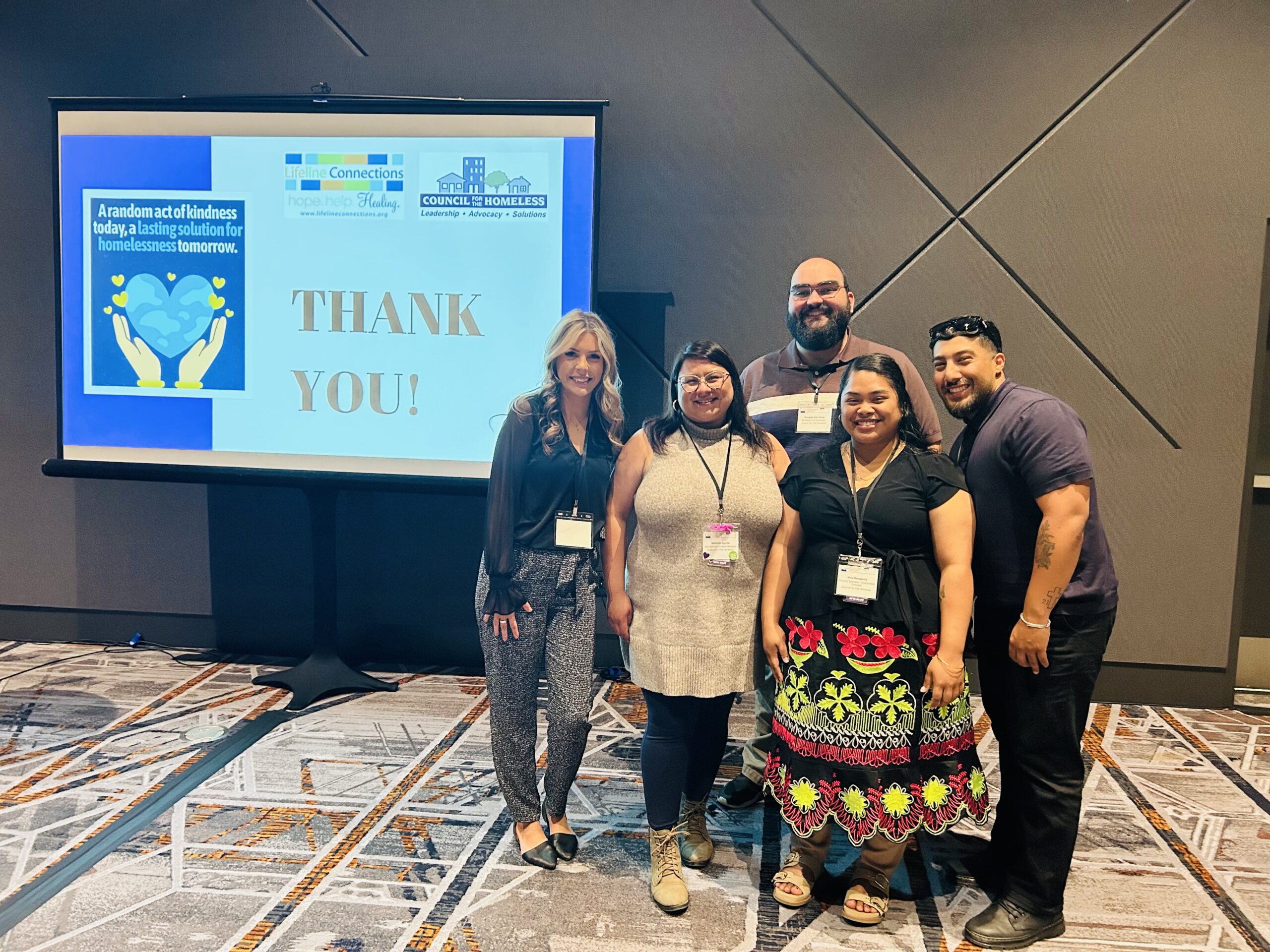
Led by outreach manager Nathalie Aguilar, the CFTH panel included Nina Rengechy, Daniel “Danny” Rivera and Doug Van Anda, with special guest and community partner Marisa Avery of Lifeline Connections. Together, the team reflected on how building trust — within organizations and across communities — creates more effective and compassionate systems of care.
Setting the Tone: Collaboration Is a Practice
Nathalie opened the session by grounding attendees in shared values and conversation agreements that make true collaboration possible. These guiding principles aren’t just philosophical, they are the day-to-day building blocks of CFTH’s approach:
- People Before Process: We work across teams and systems to support people where they are.
- Shared Mission, Shared Responsibility: Our work is stronger when aligned with community partners.
- Trust Is Built by Showing Up: Follow-through, transparency, and responsiveness matter — in emails, in meetings, and out in the field.
“Collaboration doesn’t have to be perfect,” Nathalie reminded the room. “You just have to start, and it starts with YOU!”
Case Conferencing: A Collective Model of Support
A key strategy shared during the session was case conferencing, a confidential and intentional space for providers across systems and outreach workers to collaborate on individual client needs, align services, and prevent vulnerable people from falling through the cracks.
Doug described how this model transforms outcomes:
“Case conferencing creates safety. It gives us a space to be transparent, ask for support, and respond to the immediate needs of our clients.”
Marisa added:
“It helps keep us accountable and connected, and really brings Clark County together.”
These meetings help outreach teams build a comprehensive understanding of each client’s strengths, needs, and barriers — leveraging resources from multiple agencies to help resolve challenges.
Start With Listening: Meeting People Where They Are
One of the most powerful messages was the importance of slowing down, listening, and responding to what people actually need.
“We value a housing-first approach,” Nathalie explained, “and understand that people are carrying trauma, hunger, grief — and these come with barriers and sometimes need to be addressed first. We need to slow down and move at their pace, not ours.”
For our neighbors exiting incarceration and reentering the community, Danny described offering connections before answers:
“We’re in the business of hope. When someone asks, ‘Do you have a home for me?’ or ‘Where do I go from here?’ I might not have all the answers, but I can always show up and offer compassion and empathy to build trust and help them start to build their support network, while identifying resources for their next step.”
Nina shared how this shift in mindset has led to practical changes within our assessment process, redesigning the team’s conversations with clients to be more conversational and allowing people to speak freely about their circumstances. This means less time and more efficiency in gathering basic demographic information, so there can be more time to support and build trust.
Real Barriers, Real Change
The team also addressed common challenges that often stand in the way of collaboration: nonprofits competing for the same funding, frontline workers being excluded from decision-making, and client voices being overlooked.
Rather than simply naming these challenges, they shared how CFTH is pushing for meaningful change:
- Streamlining communications between providers using the Homeless Management Information System (HMIS)
- Leading emergency coordination during severe weather and air quality alerts
- Using the restorative justice approach and advocating for more regular policy reviews to ensure they’re not causing undue harm
- Building collaborative work groups across Clark County to reduce duplication of efforts and steward resources
As Danny noted:
“People experiencing homelessness are being targeted more and more. That’s why we need trauma-informed, culturally responsive, and person-centered care, as well as systems that listen to the people they serve.”
Doug offered a reminder to the room, filled with outreach workers from across the state:
“Don’t lose your identity or your connection to the community when you show up for work. You are your community — and that authenticity matters.”
A Call to Reflect, Act, and Connect
Throughout the presentation, one message remained central: None of us can do this work alone.
Supporting vulnerable populations in uncertain times requires community, compassion, and collaboration. It means checking in, speaking up, asking for help, and being willing to grow, together. It also means making time to celebrate progress.
Nathalie closed the session with a powerful call to action:
“Collaboration doesn’t begin with policy — it begins with a person. It begins with you. It begins with us.”
Thank You for Being in the Community With Us
A special thank-you to our community partner Lifeline Connections, and to Marisa for her insight and for participating in the panel discussion. Your collaboration reflects the kind of shared purpose that drives our mission forward.
At Council for the Homeless, our commitment to preventing and ending homelessness in Clark County is rooted in collaboration, trust, and community connection. We’re grateful for opportunities such as the Outreach Academy to share our work, learn from others, and grow alongside our partners.
To join our list of community partners and agencies serving individuals and families experiencing housing insecurities and homelessness, please email us at info@councilforthehomeless.org.
