

Purpose of this toolkit
This toolkit was created for partners and community organizations to help drive engagement of and support for Everybody IN through social media platforms such as Facebook and Instagram. The toolkit can be used for any collaborative effort across Clark County that helps move people into housing and supports the idea that homelessness is solvable.
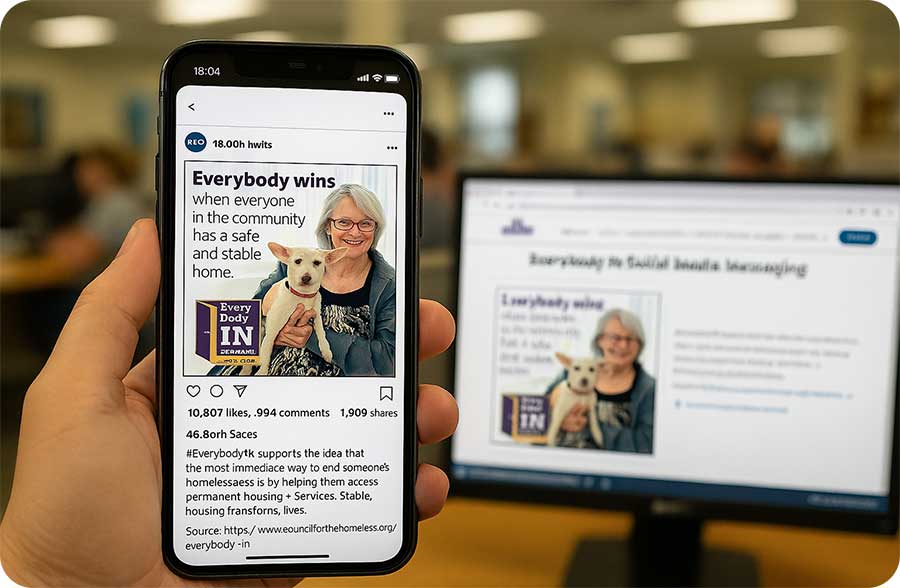
How can I help:

Everybody IN Social Media Messaging

#EverybodyIN supports the idea that the most immediate way to end someone’s homelessness is by helping them access permanent housing + services. Stable housing transforms lives.
Source: https://www.councilforthehomeless.org/everybody-in


#EverybodyIN our community is needed to help advance long-term solutions to homelessness. Community involvement on the solutions side will improve the overall livability and individual well-being of everyone in our community.
Source: https://www.councilforthehomeless.org/everybody-in

Providing immediate access to permanent housing in addition to community-based, supportive services means people can take care of their basic needs along with their physical and mental health needs. Housing First increases housing stability, improves health and addiction outcomes, and people’s overall quality of life.
Source: https://www.councilforthehomeless.org/everybody-in

With a permanent and stable place to call home, people can go to school, find steady work, volunteer, and engage in hobbies. When people are able to fulfill their personal goals and contribute to the community, everyone experiences the benefits.
Source: https://www.councilforthehomeless.org/everybody-in
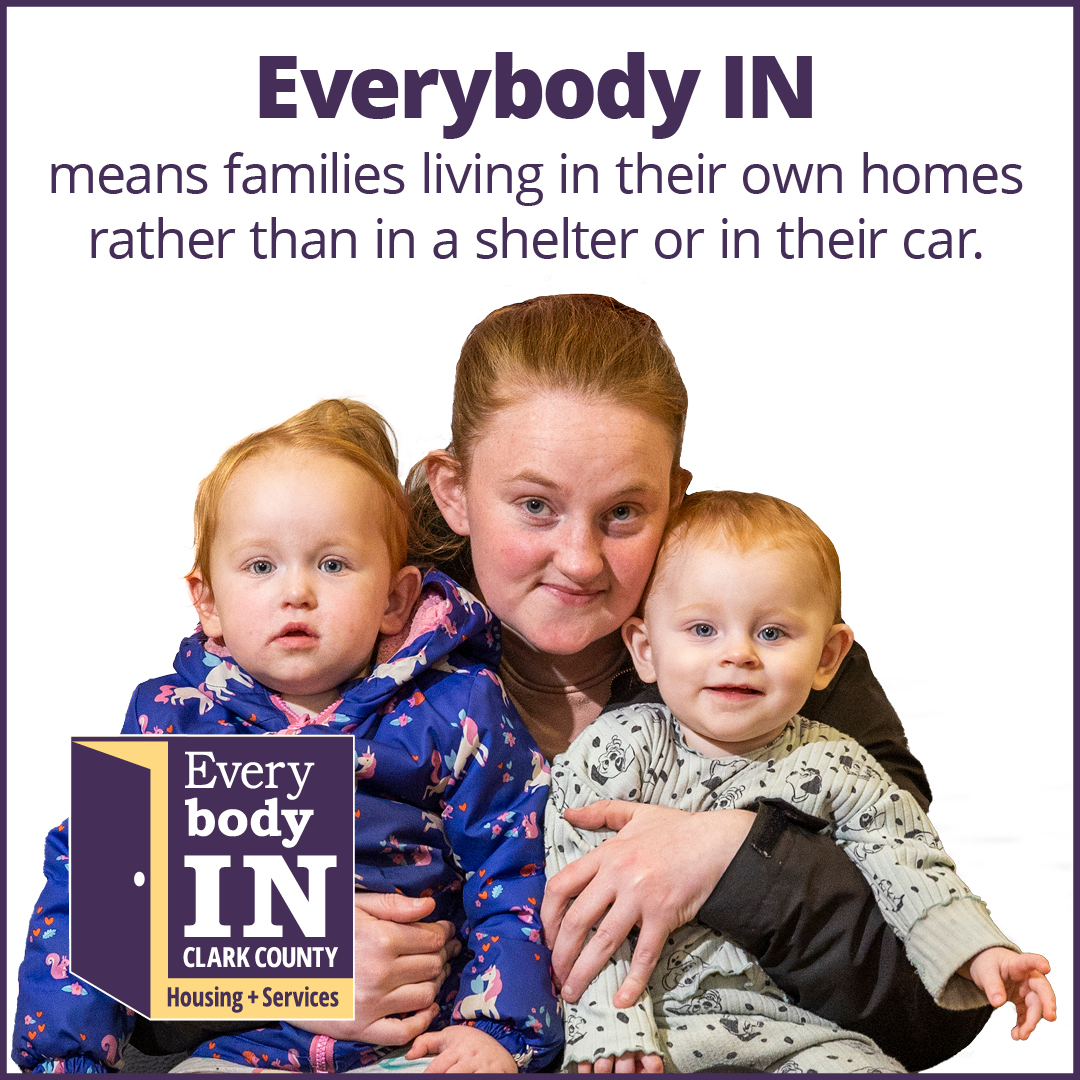
Housing First is based on the principle that everyone is ready for the next best fit housing for their personal needs and goals without proof or barriers. It is based on the understanding that client choice is valuable in housing selection and supportive service participation. Exercising this choice makes people more likely to be successful in remaining housed and improving their lives.
Source: https://www.councilforthehomeless.org/everybody-in
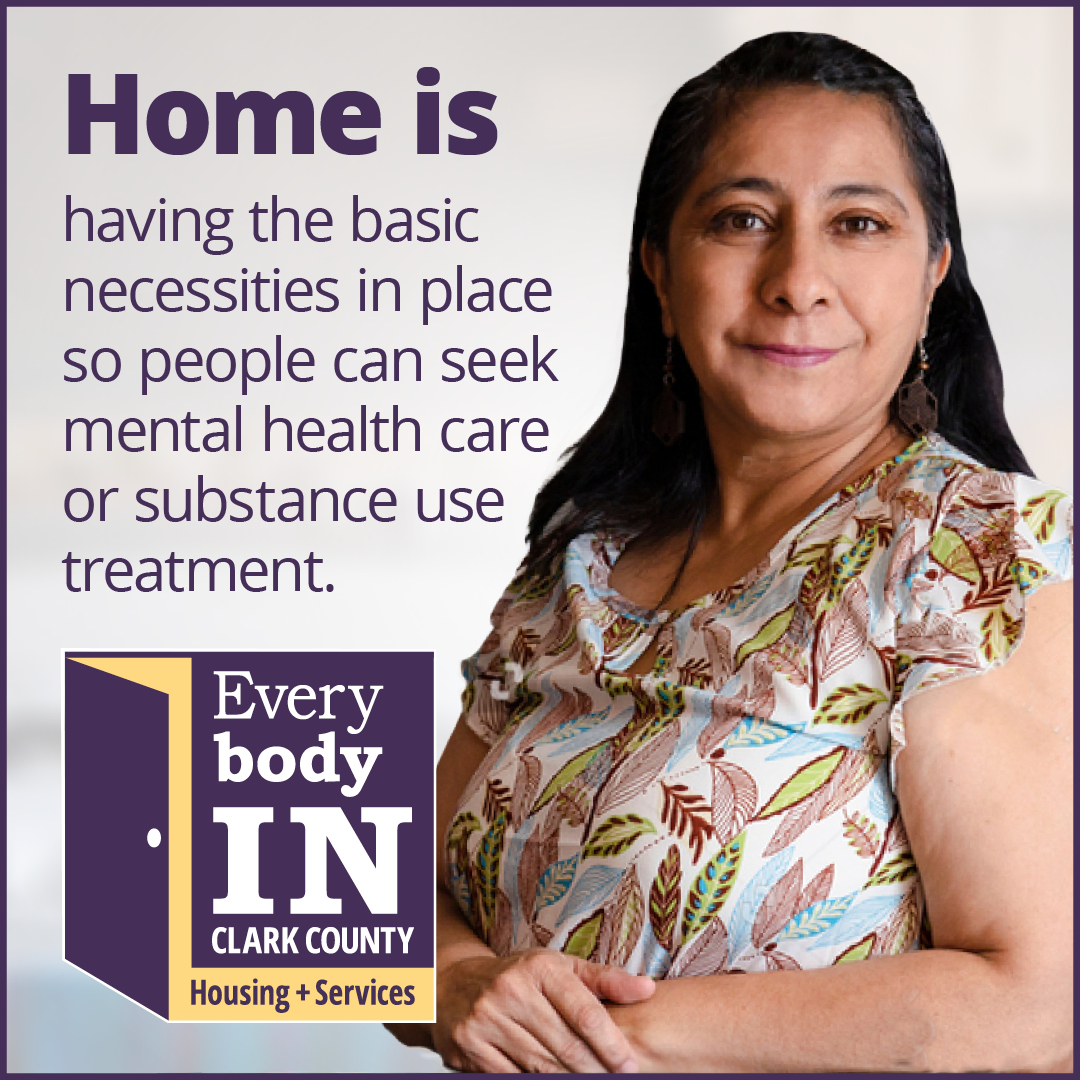
Housing First has been shown to: increase housing stability; improve quality of life, and improve health and addiction outcomes; reduce involvement with police and the justice system; reduce costs associated with justice system and health expenditures; and reduce hospitalization and emergency visits.
Source: https://www.councilforthehomeless.org/everybody-in
Five Myths about Homelessness for Social Media
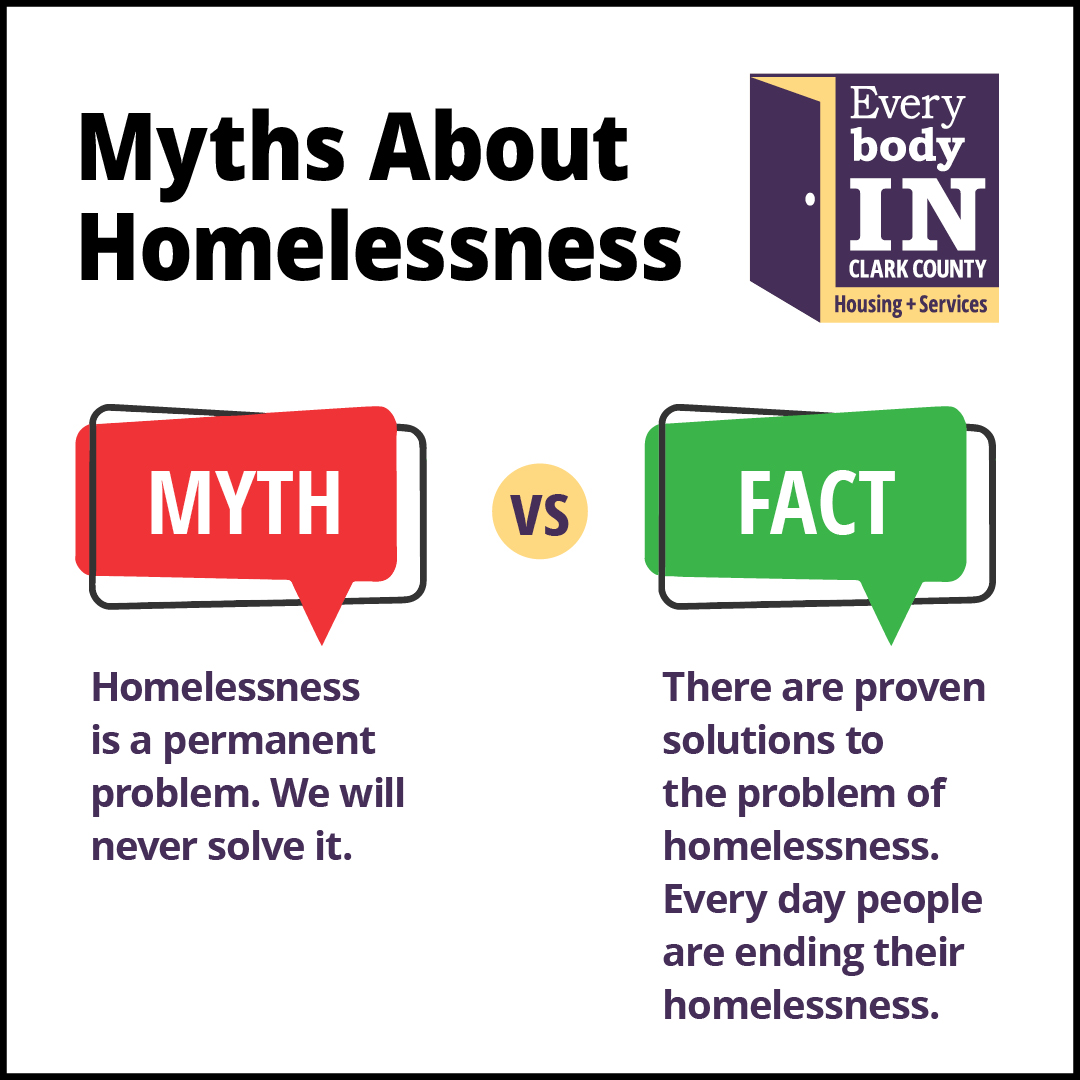
Myth #1: Homelessness is a permanent problem. We will never solve it.
Everyday people are ending their homelessness. Permanent supportive housing, an approach that combines affordable housing with support services for individuals and families living with mental illness or other disabilities — has been proven to reduce homelessness AND save taxpayer dollars otherwise spent on costly shelters and hospitalizations.
Source: https://www.coalitionforthehomeless.org/myths-and-facts/
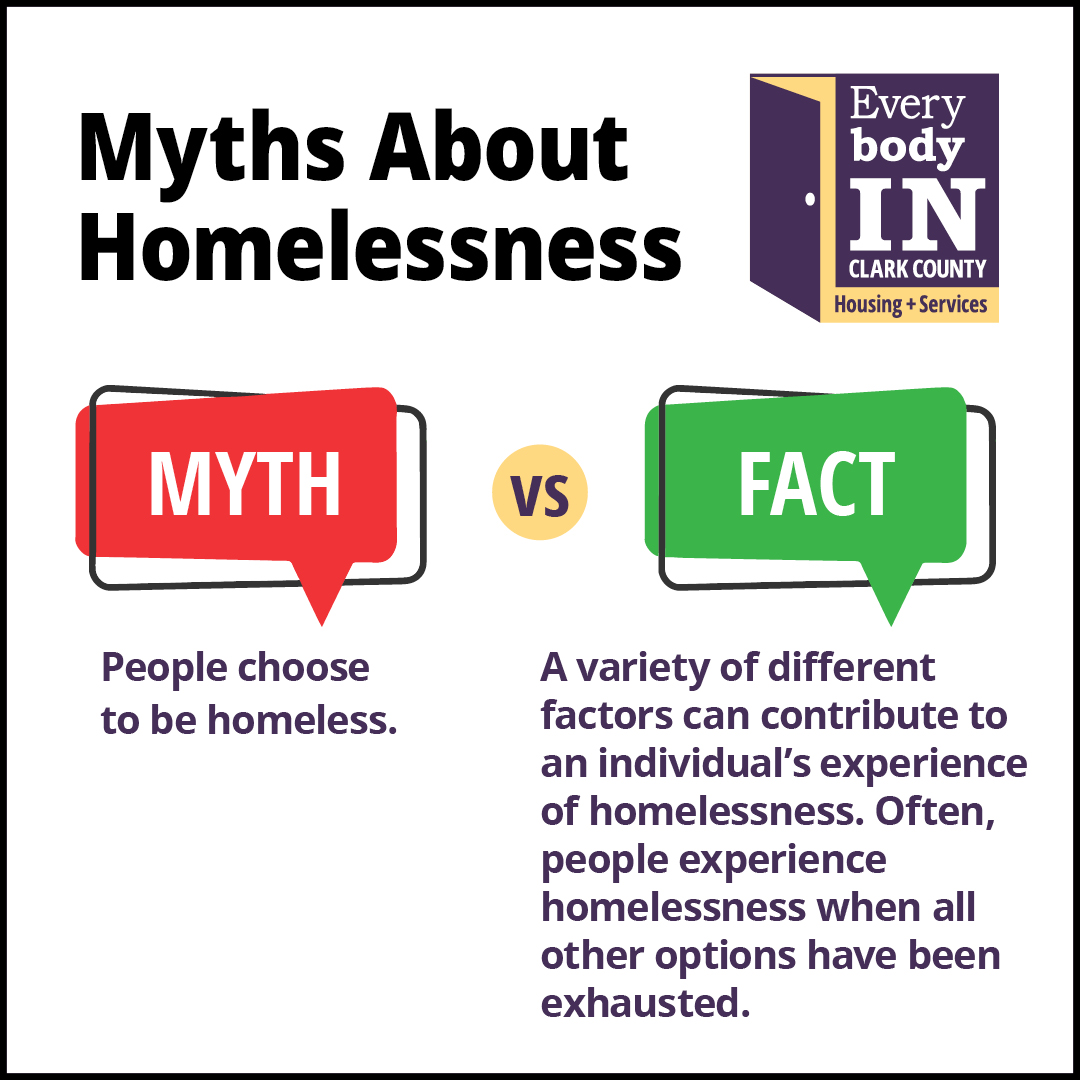
Myth #2: People choose to be homeless.
Some of the obstacles that may lead people to their experiences of homelessness include: Eviction, a lack of affordable housing, or one large unexpected expense, like a hospital stay, which makes it difficult to maintain independent housing.
Source: homelesshub.ca/about-homelessness/homelessness-101/myths-and-questions-about-homelessness
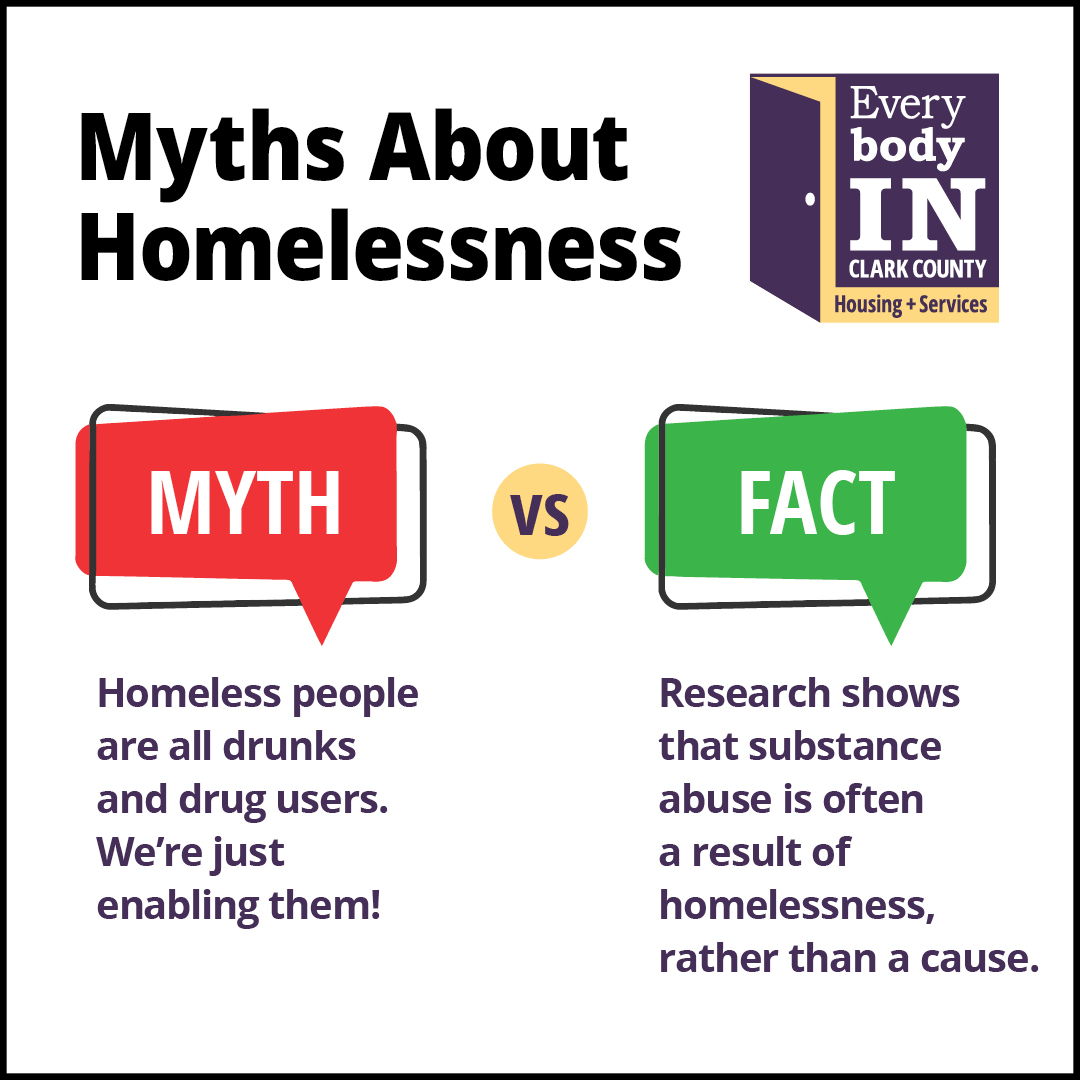
Myth #3: Homeless people are all drunks and drug users. We’re just enabling them!
Homelessness, which is usually accompanied by loss of income, isolation, and loss of self-worth, often drives people to substance abuse. It is often mistakenly assumed that people experiencing alcoholism and drug use lack moral principles or willpower and that they should simply choose to change their behavior. Recovering from addiction is difficult for housed people; it is even more difficult for people experiencing the additional trauma of homelessness.
Source: commerce.wa.gov/wp-content/uploads/2016/12/hau-chg-mythsfacts-12-8-2016.pdf
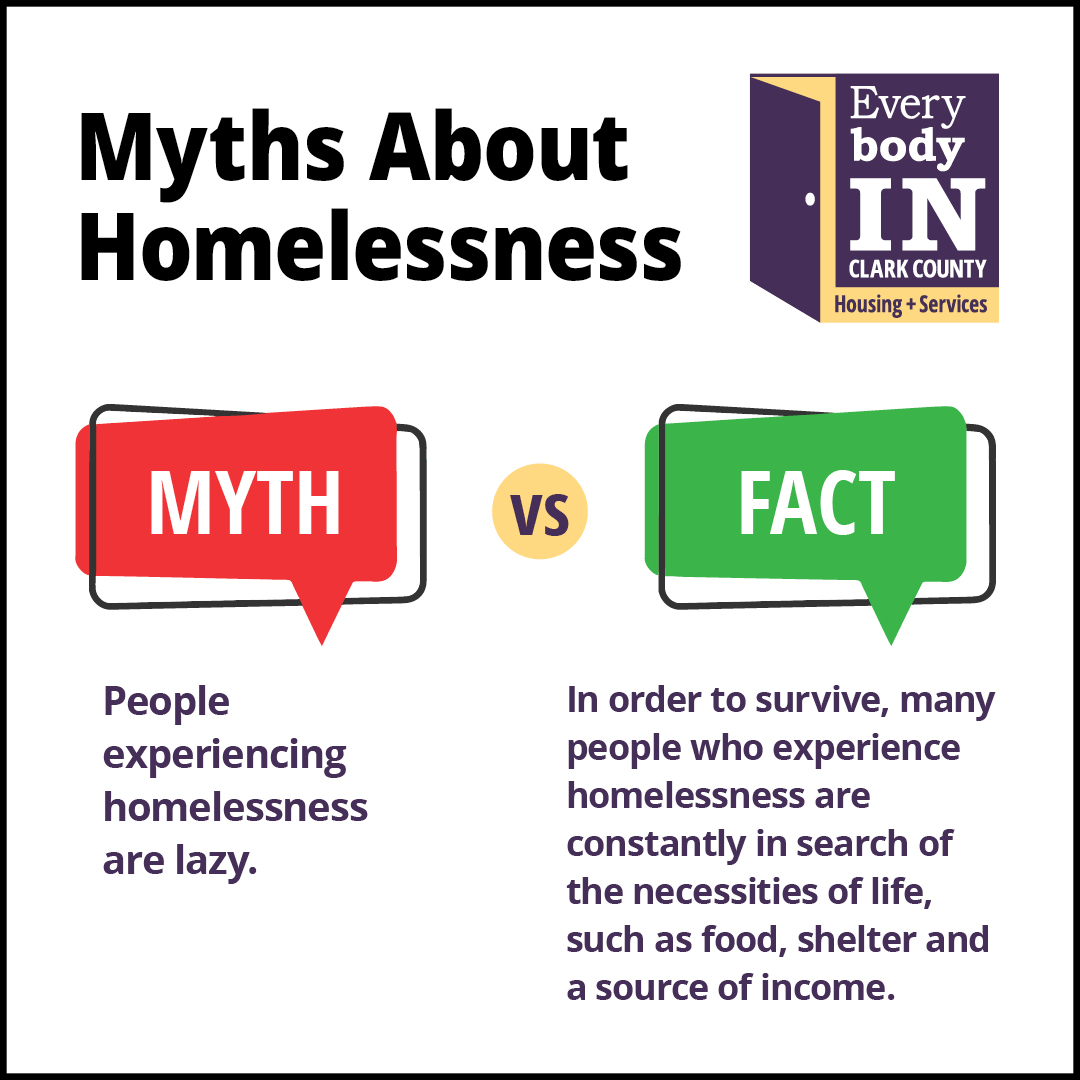
Myth #4: People experiencing homelessness are lazy.
Due to the barriers that they face, many people experiencing homelessness do not have the option of being stagnant or lazy. For example, searching for a job becomes even more challenging when an individual does not have access to a phone, computer, or fixed address on a regular basis.
Source: homelesshub.ca/about-homelessness/homelessness-101/myths-and-questions-about-homelessness
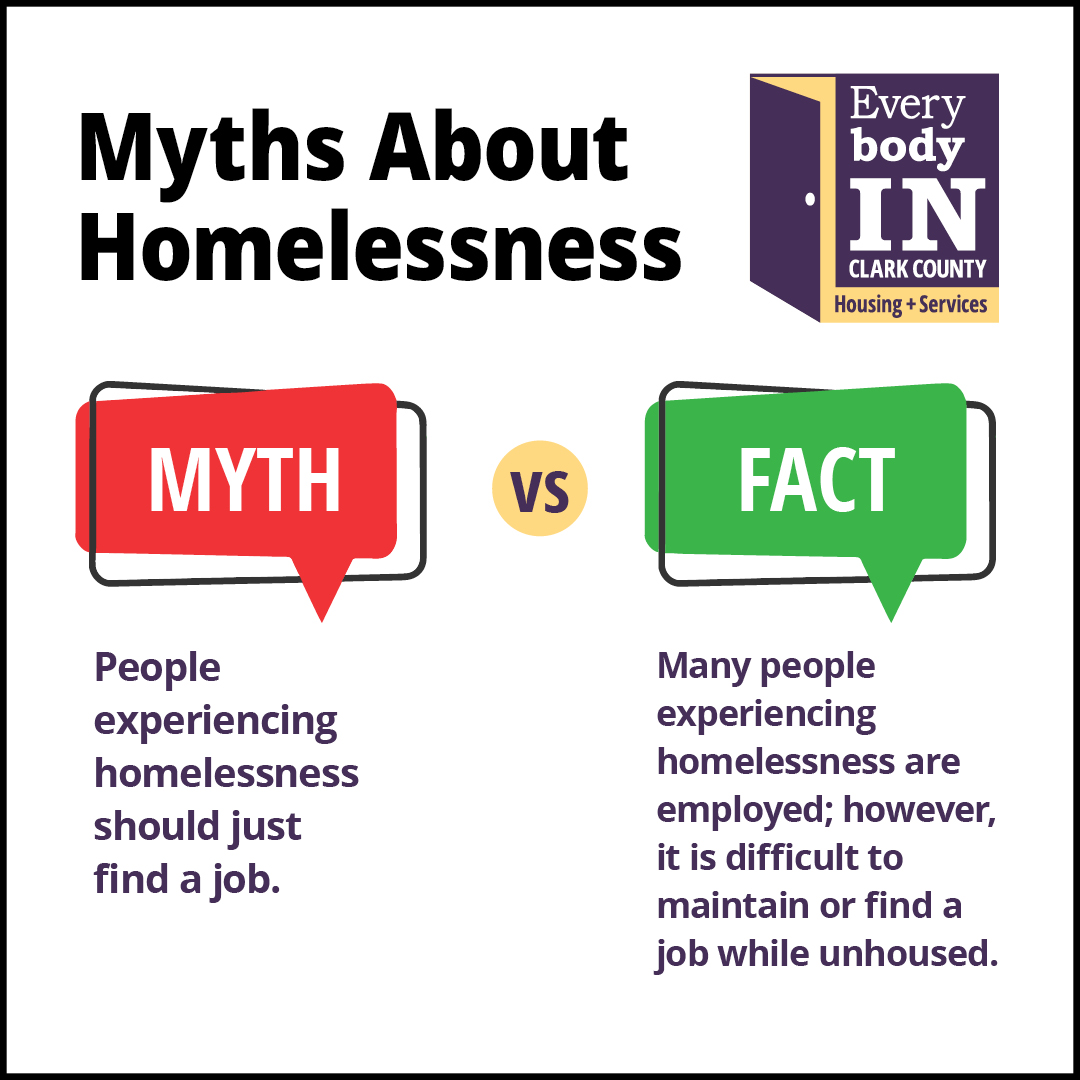
Myth #5: People experiencing homelessness should just find a job.
A number of different challenges, such as: lacking a permanent address, not having regular access to showers, barriers to transportation, and other difficulties like mental illness, make it difficult to obtain employment. Many people living outside work multiple jobs and are still unable to find affordable housing due to the high-cost of rent.
Source: homelesshub.ca/about-homelessness/homelessness-101/myths-and-questions-about-homelessness
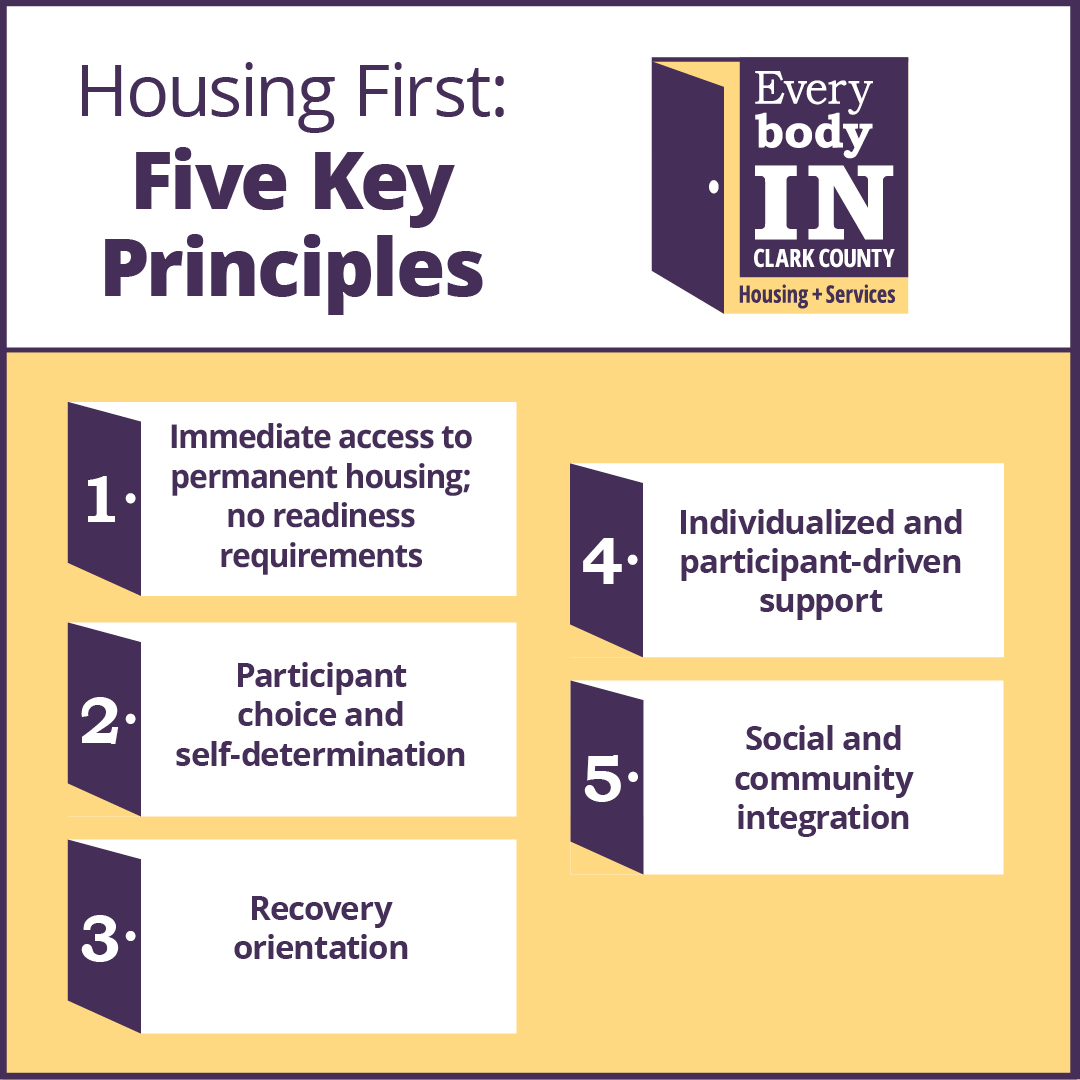
Housing First: Five Key Principles
Data has proven that Housing First delivers effective mental health and addiction recovery outcomes, and has shown that people remain permanently housed longer. Housing First is based on five key principles.
Source: Sam Tsemberis, Founder, Pathways to Housing
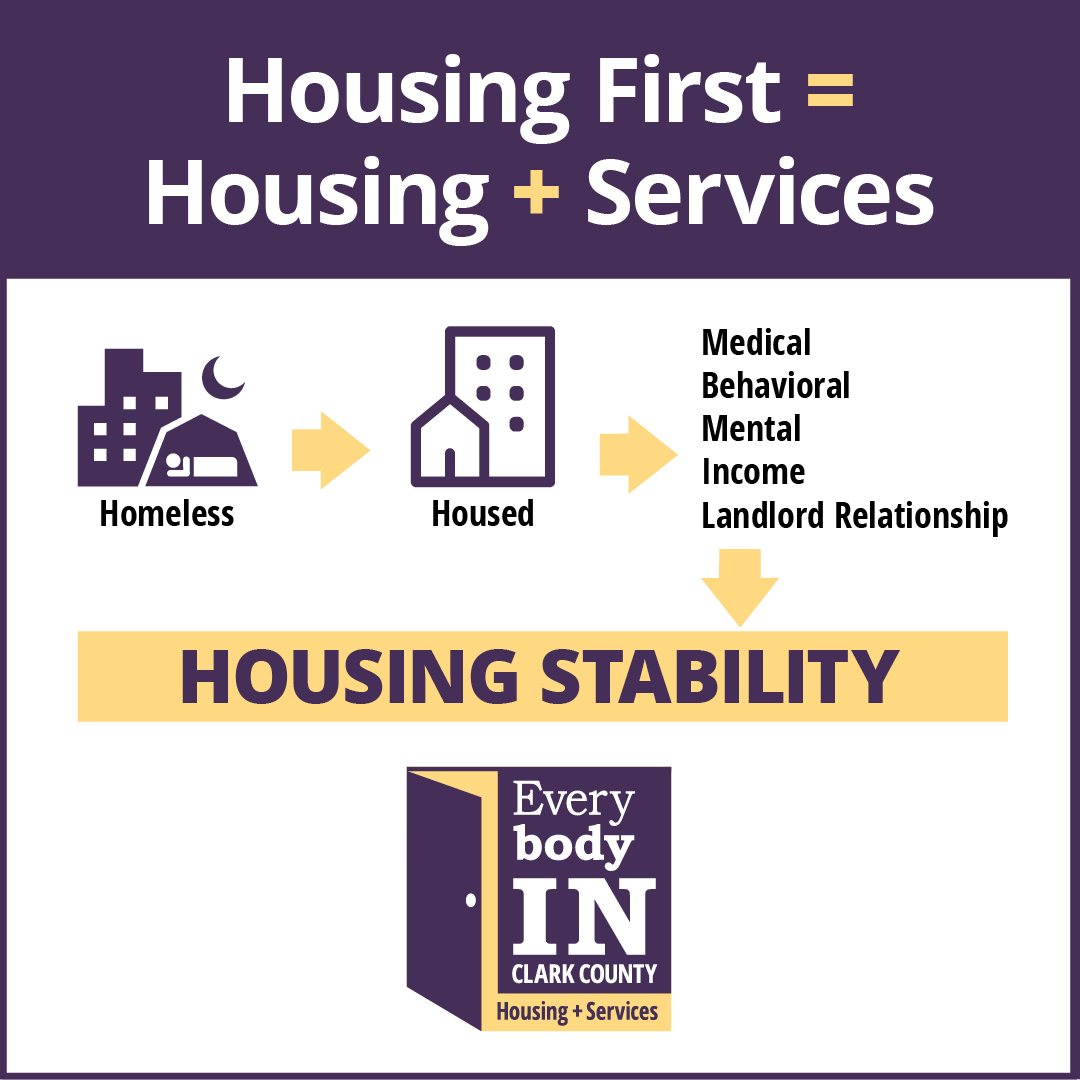
The Stability of Housing First
The Housing First model centers on quickly moving people experiencing homelessness into safe, independent and permanent housing along with support services. Providing immediate access to permanent housing in addition to community-based, supportive services means people can take care of their basic needs along with their physical and mental health needs. Housing First increases housing stability, improves health and addiction outcomes, and people’s overall quality of life.